Kirkland vs Redmond Housing: Find Your Eastside Fit
June 25, 2026
June 25, 2026
Wondering whether Kirkland or Redmond fits your life better? If you are searching for an Eastside home base, this choice can feel surprisingly close on paper and very different in real life. The good news is that each city offers a strong mix of housing, amenities, and access, and once you know what to compare, the decision gets much clearer. Let’s dive in.
Kirkland and Redmond are both high-cost Eastside markets with strong buyer demand and a lot to offer, but their housing profiles are not identical. Census Bureau estimates show Kirkland with a population of 92,175, an owner-occupied housing rate of 60.8%, a median owner-occupied home value of $1,115,400, and a mean travel time to work of 23.9 minutes. Redmond has a population of 73,256, an owner-occupied housing rate of 43.2%, a median owner-occupied home value of $1,167,800, and a mean travel time to work of 22.1 minutes.
In simple terms, Kirkland reads as a market with a stronger ownership profile, while Redmond has a more renter-heavy housing mix. Commute times are fairly close, though Redmond is slightly shorter on average. For many buyers, that means the better fit comes down less to city size and more to housing style, transit needs, and the feel of the area you want to come home to.
Kirkland says it aims to provide a variety of housing styles across the city. The city highlights ADUs, cottages, duplexes and triplexes, and residential suites as part of that mix. In 2023, Kirkland reached 42,956 homes, and single-family detached homes still made up the majority of its housing stock, even as the multi-unit share continued to grow.
That matters if you want a city where detached housing is still a major part of the landscape but where newer mixed-use and multi-unit options are also expanding. Kirkland’s future housing growth is expected to concentrate in designated Urban Centers where transportation and infrastructure already exist. For you, that can translate to a wider range of choices depending on whether you prefer an established neighborhood setting or a more urban node.
Redmond’s housing profile is more multifamily-heavy. The city reports that about half of households are renter households and half are owner households, with 46% of housing units in multifamily buildings of five or more units, 37% detached single-family, and 17% duplex-multiplex.
Redmond also permits ADUs across most zones and plans to accommodate 20,000 additional housing units by 2044. If you are looking for condos, townhome-style living, or newer housing concentrated near urban centers, Redmond may offer more of that product mix. It is a city where growth is planned at a larger scale and with a stronger center-focused pattern.
One of the biggest mistakes buyers make is treating Kirkland or Redmond like a single experience. In both cities, the subarea often matters more than the name on the map.
Kirkland’s Downtown and Moss Bay area blends retail, offices, waterfront activity, detached homes, multifamily buildings, and the Cross Kirkland Corridor. Totem Lake combines residential, retail, and office uses, while Juanita and Houghton offer their own distinct patterns and rhythms. That variety can make Kirkland feel layered, with pockets that shift quickly from shoreline activity to quieter residential streets.
Redmond has a more center-led structure. Downtown and Overlake are the two main urban centers, while areas like Education Hill, Grass Lawn, Idylwood, and North Redmond are primarily residential. Marymoor Village is also evolving into a more walkable area with housing in mixed-use developments and some townhomes along pedestrian-oriented streets.
If transit is a major factor for you, Redmond has the clearest advantage right now. Sound Transit opened the 2 Line extension to Marymoor Village and Downtown Redmond on May 10, 2025. The line runs every 10 minutes from 5:30 a.m. to 9:30 p.m. daily between South Bellevue and Downtown Redmond.
Redmond also points to city-built pedestrian and bicycle connections to stations, and Overlake is served by two light rail stations plus frequent local and regional express buses. If your routine depends on frequent transit access, or you want to prioritize homes near rail service now rather than later, Redmond deserves a close look.
Kirkland’s transit network is currently bus-centered. The city has three transit centers and three park-and-rides, and King County Metro lists Kirkland Transit Center as a key boarding location.
Kirkland also has major transit improvements in the pipeline. The RapidRide K Line is planned to connect Totem Lake, downtown Kirkland, downtown Bellevue, and Eastgate, with service targeted for 2030. The NE 85th Street Station Area Plan also identifies a future bus rapid transit stop as a primary housing and employment growth area, with that BRT stop anticipated to be operational by 2027.
For buyers, the takeaway is straightforward. If you want rail access now, Redmond stands out. If you are comfortable with a bus-based network today and want to watch long-term transit improvements shape future value and convenience, Kirkland may still align well.
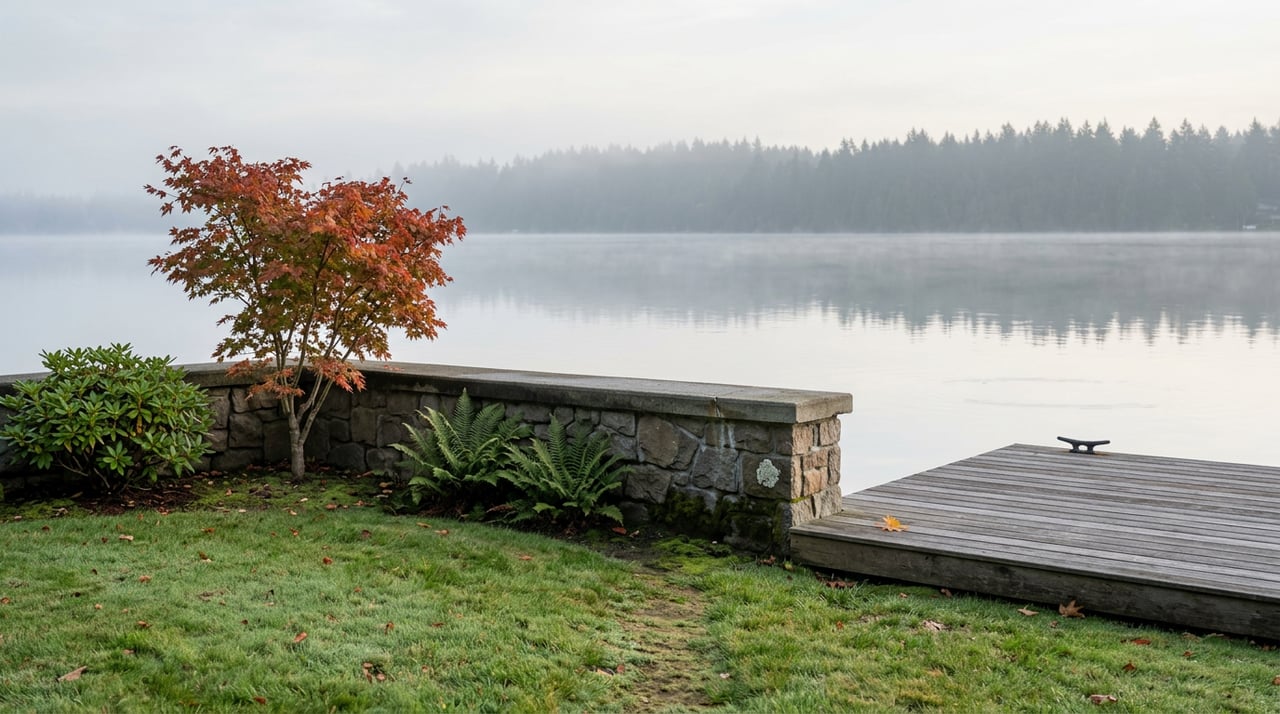
Kirkland’s public spaces are strongly tied to Lake Washington. Marina Park sits downtown near restaurants and shops and includes a sandy beach, boat launch, public art, a pavilion, concerts, and views across the water. Juanita Beach Park adds 1,000 feet of shoreline, a seasonal swimming area, and a fenced off-leash area.
The city also features the 5.75-mile Cross Kirkland Corridor and more than 500 acres of natural areas restored through the Green Kirkland Partnership. Even so, Kirkland’s identity reads as especially shoreline-focused. If you picture weekend walks by the water, a downtown beach setting, or a stronger waterfront presence, Kirkland may feel more intuitive.
Redmond offers a different kind of outdoor access. The city reports 47 parks covering 1,351 acres and 59 miles of public trails. Its system highlights the Redmond Central Connector, Downtown Park, and multiple routes linking neighborhoods to larger trail corridors.
The Redmond Central Connector is a 3.9-mile trail that ties together Downtown, Grass Lawn, Willows Road, the Sammamish River Trail, East Lake Sammamish Trail, and eventually Eastrail. Marymoor Village sits next to Marymoor Park, and Idylwood Beach Park adds a swim-beach option. If your ideal routine includes trail running, biking, park access, and citywide connectivity through open space, Redmond may be the stronger lifestyle match.
Kirkland may appeal most if you want your home search to balance established neighborhoods with select growth areas. It can be a strong fit if lifestyle and setting matter just as much as square footage or commute math.
Redmond may be the better match if you want more transit-ready options and a city structure that feels more organized around major hubs. It can also be appealing if you expect to compare more condos, townhomes, or mixed-use communities during your search.
The best Kirkland versus Redmond decision usually comes from touring the right subareas, not just comparing citywide stats. Two homes at similar price points can offer very different daily experiences depending on whether you are near a waterfront district, an urban center, a trail corridor, or a quieter residential pocket.
That is where local guidance becomes especially valuable. When you narrow your search by commute style, housing type, and lifestyle priorities, the right fit often becomes obvious much faster. Instead of asking which city is better, ask which part of each city matches how you want to live.
If you are weighing Kirkland against Redmond and want a more tailored, neighborhood-level strategy, Sipos Homes LLC can help you compare the right subareas, refine your search, and move forward with confidence.
Stay up to date on the latest real estate trends.
Etiam non quam lacus suspendisse faucibus interdum. Orci ac auctor augue mauris augue neque. Bibendum at varius vel pharetra. Viverra orci sagittis eu volutpat.
AMANDA SIPOS
800 5th Ave Suite 101-800 Seattle WA 98104