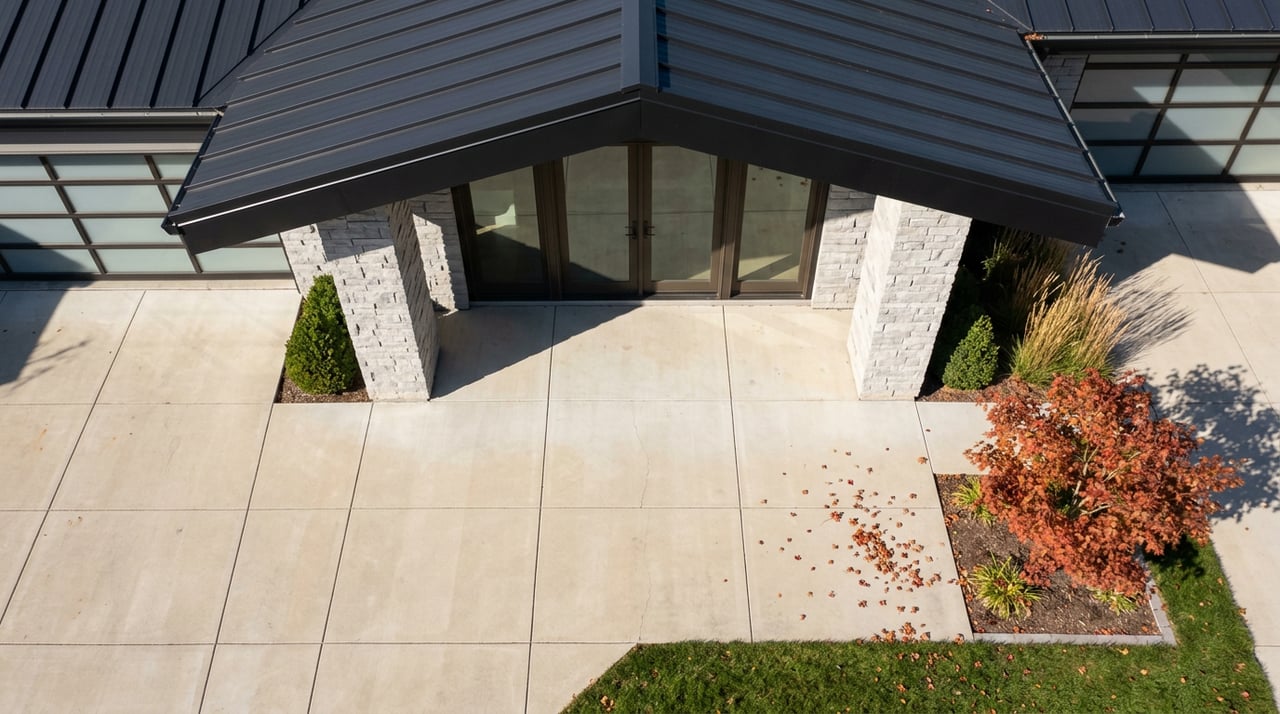
Redmond's Rail District Skipped the Parking Lot and Built a Restaurant Row Instead
September 24, 2026
September 24, 2026
Walk out from under the elevated platform at Downtown Redmond Station and you'll notice something missing. There's no parking garage attached to it. No surface lot ringed with pay stations. Just the Redmond Rail District Building rising right at the base of the tracks, its ground floor filling in with restaurants that assume you arrived on foot, not in a car.
That's not an oversight. It's the plan working.
When Sound Transit opened the Downtown Redmond extension of the 2 Line, the agency built 1,400 new parking spaces for the project. All of them landed two stations back, at Marymoor Village. Downtown Redmond Station itself, the elevated stop that straddles 166th Avenue Northeast, got none. If you're driving to catch a train, you park at Marymoor and ride two stops in. If you live or work within walking distance of downtown, the station assumes you'll just walk to it.
Redmond backed that assumption with infrastructure. The city's own light rail planning page lists a Cleveland Street sidewalk reconstruction project specifically to improve pedestrian access to the downtown station, part of a broader package that also added a Redmond Central Connector link to the elevated guideway and a pedestrian bridge under NE 40th Street funded by Microsoft. None of that is designed for cars circling for a spot. It's designed for people walking from an apartment, an office, or a restaurant a few blocks away.
So the question worth asking isn't why the station has no parking lot. It's what showed up instead, now that Redmond has spent more than a year betting that people would walk there anyway.
The answer is a restaurant row that didn't exist two years ago. The Redmond Rail District Building, the same structure anchoring the station entrance, already houses Shake Shack and Joe & the Juice. This September, Seattle restaurateur Kurt Beecher Dammeier is adding a third name to that lineup. His Yukon Standup Steak House, a fast-casual concept from the founder of Sugar Mountain, the company behind Beecher's Handmade Cheese and Pasta & Co., is taking a 1,450-square-foot space at 16421 Cleveland Street. Dammeier already runs two other steak concepts, Mishima Reserve and the Butcher's Table in South Lake Union, so this isn't a first attempt at the format. It's an operator who knows what a steakhouse needs, choosing a block with no dedicated parking to open one.
That's the tell. A restaurant group doesn't lease into a transit-adjacent block by accident. Yukon Standup is betting on the same foot traffic the sidewalk reconstruction and the missing parking garage were built to generate, the residents of the upscale apartments and townhomes that now sit above and around the Rail District Building, plus everyone stepping off a train that, as of this year, goes a lot further than it used to.
The timing lines up almost exactly. Downtown Redmond Station opened in May 2025 as the eastern terminus of the 2 Line, a useful but limited stop that connected riders to Bellevue and not much past it. That changed on March 28, 2026, when Sound Transit's Crosslake Connection opened the floating bridge segment across Lake Washington, linking Downtown Redmond straight through Bellevue, Mercer Island, and downtown Seattle before continuing north. A trip from Redmond to the International District now runs about 41 minutes, with trains arriving roughly every eight minutes at peak.
At the ribbon cutting for the original downtown extension, Redmond's mayor Angela Birney put the significance plainly.
"Today's opening is one more visual indicator of our transition from a suburb to a city."
A rider named Zereline Mukherjee, who'd lived in Redmond more than twenty years by the time the station opened, told KIRO 7 what that transition actually felt like from the platform.
"I love trains. I've been looking forward to this line opening so I can go to Bellevue and not have to drive through all the traffic. It's amazing."
Now extend that same sentiment to Seattle. The Rail District isn't just a place to grab dinner before a train ride anymore. It's a neighborhood where a resident can walk downstairs for a steak, or walk downstairs to catch a train into the city, without ever needing to find a place to park either trip.
Restaurants aren't the only thing catching up to the foot traffic. The city's Downtown Redmond Art Walk lands Thursday, September 19, pairing local artists with downtown businesses along the same corridor that's been absorbing new leases all year. It's a small event on paper, but it's the kind of programming that only makes sense once a block has enough density of storefronts and passersby to support it. A few weeks after that, Redmond Town Center hosts its second annual Howl-O-Ween on October 17, a short bus ride or bike from the Rail District and further evidence that downtown Redmond's fall calendar is filling out block by block rather than one big annual event carrying the whole season. Later in the year, Redmond Lights returns to Downtown Park with its usual mix of light installations and art, giving residents one more reason to end up downtown after dark instead of driving somewhere else for the evening.
None of these are the kind of headline openings that make a city famous. That's exactly the point. A Thursday art walk and a mall Halloween event aren't built for tourists. They're built for the people who already live within walking distance and need a reason to stay on their own block instead of driving to Bellevue or Seattle for the night.
Stand at the base of the Downtown Redmond Station platform this fall and here's what's within an easy walk:
That last item is the one that changes daily habits more than any single restaurant opening. A resident who used to drive to Seattle for dinner or a show now has the option to walk to the platform, ride in, and walk home again. The steakhouse two doors down means that same resident doesn't have to choose between a night out downtown and a night out in the city. Redmond built the sidewalk and skipped the parking lot on the theory that people would rather walk than drive if the walk actually went somewhere. A year and a half after the station opened, and six months after the line reached across the lake, the Rail District is starting to look like the theory paid off.
If you're already living in Redmond and watching this block fill in, you've probably noticed the same pattern showing up in other pockets of the Eastside, wherever a city bet on foot traffic before the retail arrived to prove it right. That's the kind of shift worth understanding before it shows up in a listing price. If you want a read on what it means for your own street, Sipos Homes is a good place to start that conversation. Schedule a consultation whenever you're ready to talk specifics.
Stay up to date on the latest real estate trends.
Etiam non quam lacus suspendisse faucibus interdum. Orci ac auctor augue mauris augue neque. Bibendum at varius vel pharetra. Viverra orci sagittis eu volutpat.
AMANDA SIPOS
800 5th Ave Suite 101-800 Seattle WA 98104