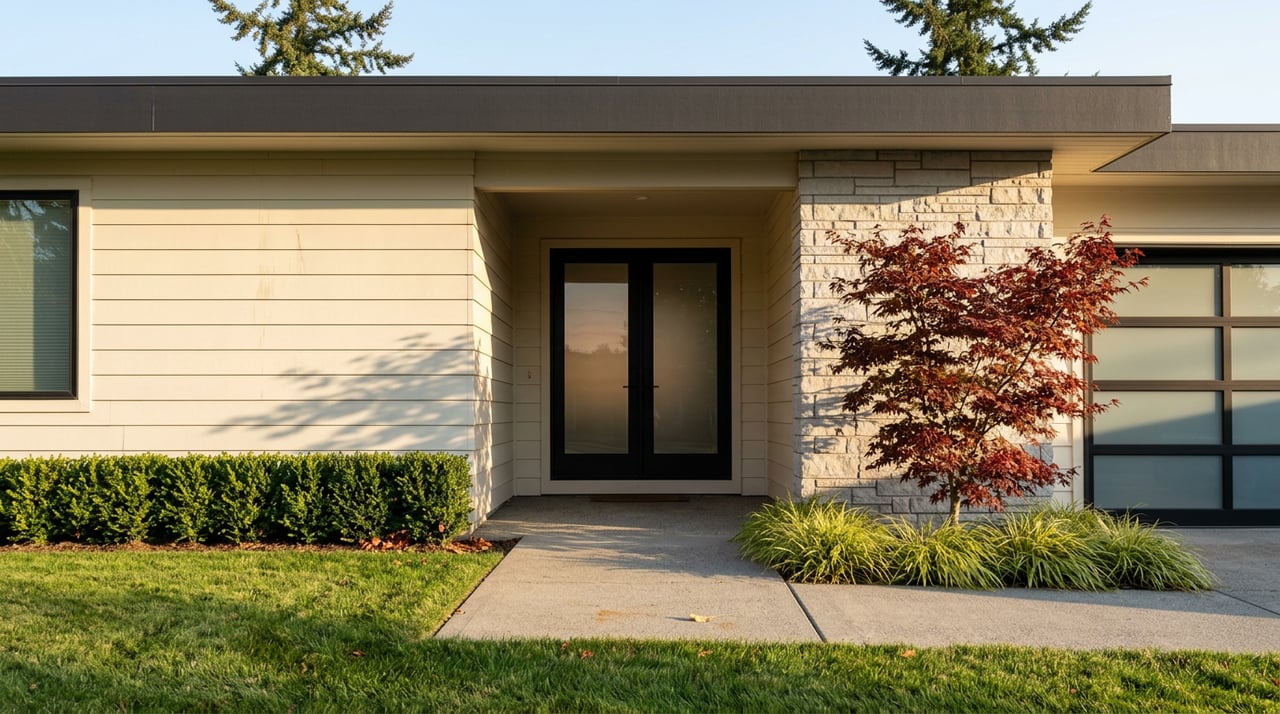
The Downtown Redmond Condo Market Has a Comp Problem, Not a Price Problem
September 17, 2026
September 17, 2026
Pull up recent closings for a two-bedroom in Frazer Court, Maxwell Place, or The Cleveland right now and the numbers argue with each other. One figure says values are holding steady. Another says they cratered. A third says nothing sold fast enough to matter either way. None of these are wrong. They are measuring a submarket that has stopped behaving like one market and started behaving like two, stacked on top of the same handful of blocks around Cleveland Street.
If you own a condo in downtown Redmond and you are thinking about listing this fall, the confusing part isn't your home's value. It's what the neighborhood-level data is actually telling you, and why an appraiser or a buyer's lender might read it very differently than you do.
Start with the Northwest MLS-sourced figures for downtown Redmond specifically, not Redmond citywide. Over the three months ending in June 2026, the median sale price in the neighborhood was up 2.2 percent from the same period a year earlier. That sounds like a stable, appreciating market. In the same window, the average sale price for a single month fell 32.4 percent year over year, and homes took 60 days to sell on average compared to just 5 days the year before. Only 6 homes closed downtown in June 2026, down from 13 the year prior.
A median and an average moving in opposite directions inside the same tiny dataset isn't a market correcting. It's a market where six transactions can swing the story in either direction depending on which six homes happened to close. A 900-square-foot condo in an older elevator building and a large townhome-style unit near the Connector Park trail do not belong in the same trend line, but with volume this low, they end up in one anyway.
That volume problem is the first thing a seller needs to understand before pricing a listing. The second is why the volume looks like this at all.
Downtown Redmond's existing condo and townhome stock is mostly a product of the late 1980s through the mid-2000s. That's the era that produced buildings like The Cleveland, Maxwell Place, Frazer Court, and the Gull-Val complex, the same names that show up repeatedly in current resale listings.
At the same time, brand new luxury product has been landing within a few blocks of that older stock, timed almost exactly to the light rail station that opened on Cleveland Street in May 2025. Eastline Grand and Broadstone Vega are already delivered. AMLI Redmond Way and Polaris are part of the same wave. According to reporting from The Urbanist, downtown Redmond has seen 43 major mid-rise projects completed since 1999, and five more were under construction as the station opened.
When an appraiser goes looking for comparable sales on a 1998-built two-bedroom condo, the honest answer is that there often isn't a clean match within a reasonable radius. The building next door might be six years old with concierge parking and a rooftop deck. The one across Cleveland Street might be twenty-five years old with a surface lot. Both count as "downtown Redmond" on paper. Neither is a real comp for the other, and lenders know it, which is part of why days on market have stretched out for older units even as new construction absorbs demand quickly.
The neighborhood isn't losing value. It's losing a shared reference point for what "downtown Redmond condo" even means as a category.
The comp problem is about to get more pronounced, not less. In October 2025, the Redmond City Council voted 6 to 1 to approve a five-phase master plan for the redevelopment of Redmond Town Center, covering the 19-acre core of Fairbourne Properties' roughly 21-acre retail site, with Hines as development manager. The approved ordinance sets a cap of up to 1,020 residential units across the site, built out over 10 to 15 years directly adjacent to the Downtown Redmond light rail station.
Hines' own project materials describe an earlier version of the plan topping out closer to 900 units of housing, or an office-heavy alternative of about 550,000 square feet, so the final unit count the city approved is somewhat higher than what the developer had floated publicly. Either way, this is a multi-phase, decade-plus construction timeline sitting on the doorstep of every existing condo building within walking distance of Redmond Town Center.
The zoning underneath all of this changed on June 28, 2025, when the city consolidated its twelve downtown zoning districts into three and rewrote the code so that areas around the light rail station now allow buildings up to 12 stories with incentives. That is a meaningful jump from what many of the existing 1990s and 2000s condo buildings were built under, and it is part of why land near the station is being valued differently than land even two or three blocks away.
There's also a smaller, more immediate project worth knowing about if your building sits near the station: Plymouth Housing is constructing a 100-unit permanent supportive housing building at 16725 Cleveland Street, a few steps from Downtown Redmond Station, with an anticipated opening in early to mid 2027. It's a modest project by square footage, but it's active construction on a site most buyers researching the immediate blocks around the station will ask about.
None of this means values are threatened. Redmond's own downtown planning documents project the neighborhood's population nearly tripling from 4,300 residents in 2010 to a targeted 11,400 by 2030, which is a demand signal, not a warning sign. But a decade of visible construction next to your building is a fact a buyer's agent will raise during due diligence, and it's better to have already answered the question than to be answering it during an inspection period.
Older HOAs are where the practical friction shows up first. Washington law requires the seller of a resale condo to provide the buyer with a resale certificate from the homeowners association, covering financial statements, reserve fund balances, and any pending or approved special assessments. In a market with 25-year-old buildings, this document isn't a formality. It's often the thing that determines whether a buyer's lender will finance the unit at all.
Current downtown listings make this concrete. Several active listings this year specifically call out healthy reserve funds and roof replacements that are fully funded and already scheduled, details sellers are clearly getting ahead of because buyers are asking. That's the right instinct. An HOA with a thin reserve or an unresolved special assessment vote can add weeks to a closing timeline that a seller assumed would move in the usual 30 to 45 days.
Before listing a downtown condo this fall, it's worth having ready:
The thesis here isn't that downtown Redmond condos are underpriced or overpriced. It's that the automated comp tools buyers and even some agents lean on are working with too little data and too much variation to tell a clean story right now. A seller who waits for the market to "clarify itself" through more sales volume may be waiting through several more months of exactly this kind of noise, since volume this low tends to stay low until either the resale stock or the new-construction pipeline pulls further ahead.
The better move is building the comparable set by hand, building-by-building, and pairing it with a resale certificate and HOA documentation that's already assembled before the first showing. That's the kind of listing presentation that gets an appraiser to a defensible number instead of a guess, and it's exactly the kind of groundwork worth doing with an agent who already knows which downtown buildings are actually comparable to yours.
Does a 32 percent average price drop mean downtown condos actually lost a third of their value? No. That figure reflects a single month with only six closings, where a handful of lower-priced units happened to sell. The three-month median for the same period was up 2.2 percent. Both numbers are accurate. Neither one describes the whole market on its own.
Will construction at Redmond Town Center start immediately? The master plan approved in October 2025 covers five phases over 10 to 15 years, and the developer has room to sequence phases based on market conditions. Buildings closest to the site should expect visible activity to ramp up over the next several years, not all at once.
Who orders the resale certificate, and how long does it take? The seller typically requests it from the HOA's management company. Turnaround varies by building, but budgeting one to two weeks is reasonable, and starting the request before you have an accepted offer avoids it becoming the reason a closing slips.
If you're weighing a sale in downtown Redmond this fall and want a comp set that actually holds up under an appraiser's scrutiny, Sipos Homes can walk through your building, your HOA's paperwork, and what's actually happening next door before you set a price. Schedule a consultation and get a read on your specific building, not just the neighborhood average.
Stay up to date on the latest real estate trends.
Etiam non quam lacus suspendisse faucibus interdum. Orci ac auctor augue mauris augue neque. Bibendum at varius vel pharetra. Viverra orci sagittis eu volutpat.
AMANDA SIPOS
800 5th Ave Suite 101-800 Seattle WA 98104