Snohomish's Median Home Price Is Hiding Two Other Markets
August 27, 2026
August 27, 2026
Tell two buyers the same number and they will picture two different houses. Quote someone a $750,000 median for Snohomish and one person imagines a wraparound porch two blocks from the antique shops on First Street. Another pictures five acres, a barn, and enough distance from the neighbors to keep chickens. Both are picturing homes that number rarely buys.
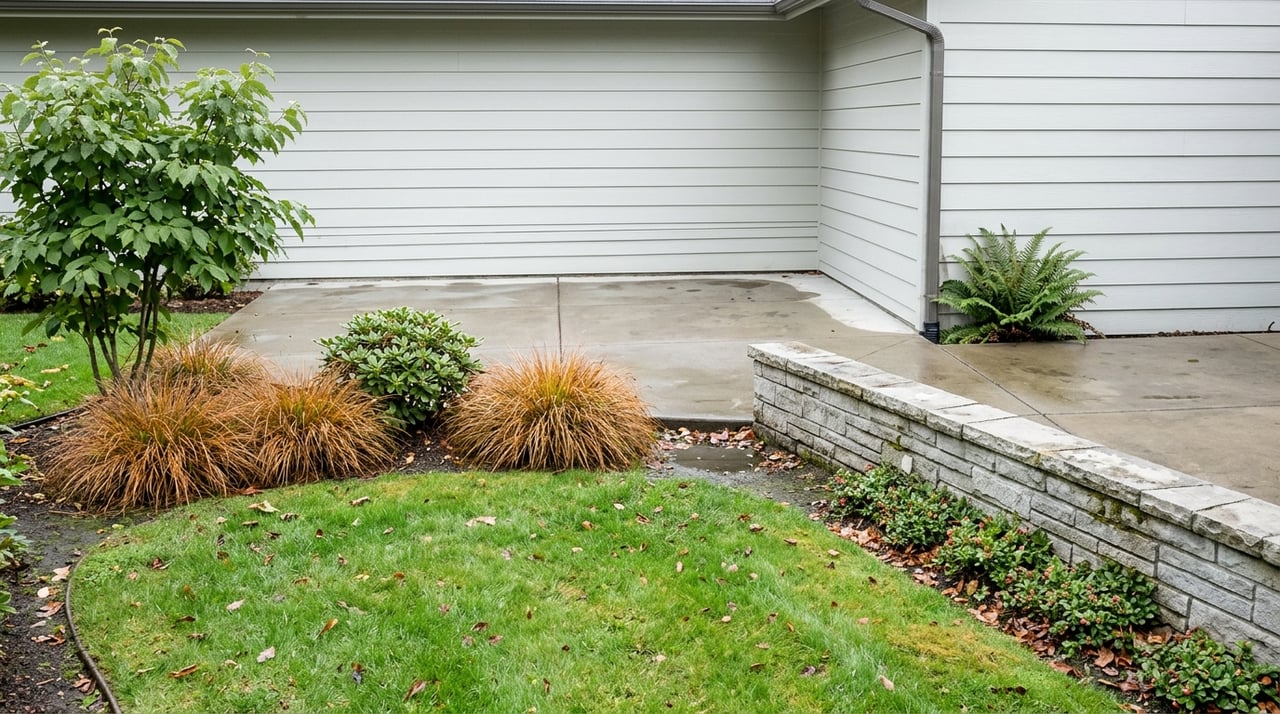
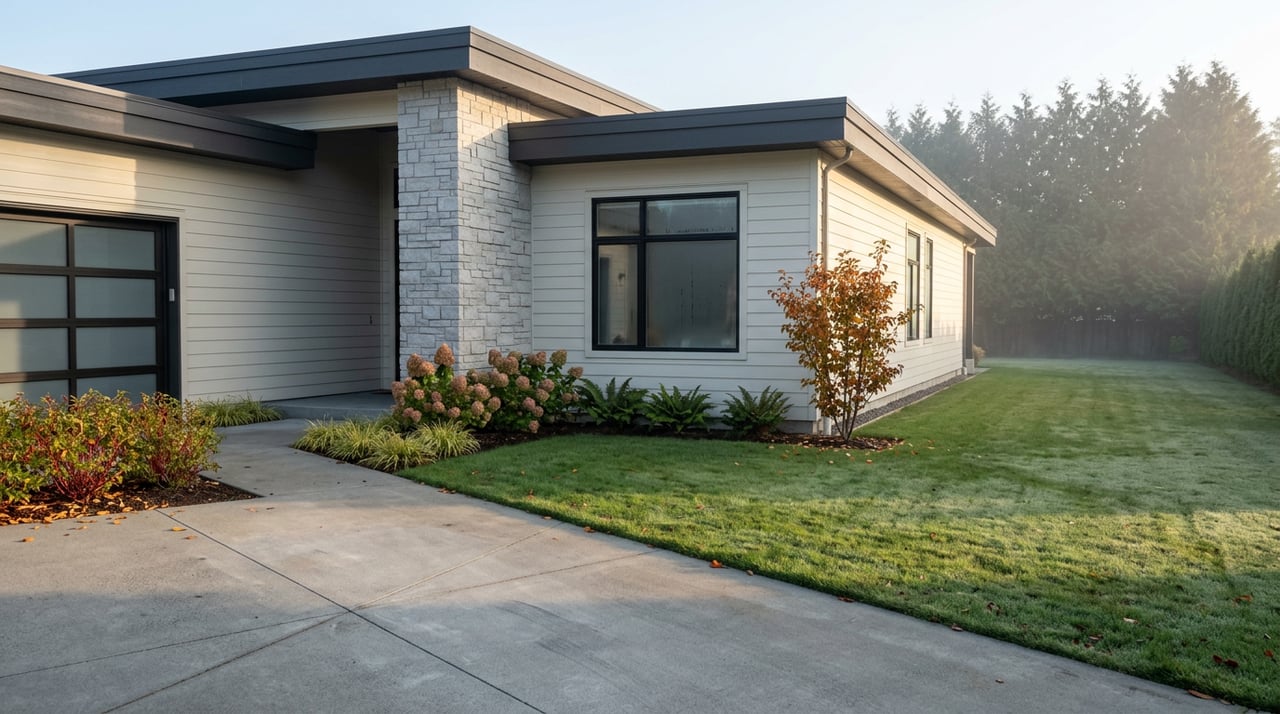
What $750,000 mostly buys in Snohomish right now is a newer three or four bedroom house off Bickford Avenue, not far from a self storage facility going up on one side of the road and a 294-unit apartment project working through permitting on the other. That's not a knock on the neighborhood. It's a fact about how the math works. Snohomish isn't one housing market wearing one median price. It's three markets, and the one doing almost all the transacting is the one setting the number everyone quotes.
Over the three months ending in May 2026, the median sale price in the city of Snohomish sat at $750,000, up 6.7 percent from the same window a year earlier. Price per square foot climbed to $424, up 7.5 percent year over year. Homes went pending fast, averaging around 7 days on market with buyers typically fielding two offers.
Here's the detail that changes the story: only 38 homes sold in May 2026, down from 58 in May of the prior year. Prices went up while the count of sales went down. That's not a market cooling off. It's a market where fewer homes are changing hands but the ones that do are pricier, which is the fingerprint of tightening supply, not softening demand.
Zoom out to the county and the picture looks looser. Snohomish County had 2,246 homes for sale in July 2026, up about 37 percent from 1,641 a year earlier, and John L. Scott's July 2026 housing update noted that the $350,000 to $750,000 range carried the most intense demand countywide, with roughly half of new listings in that band going pending within 30 days. The city of Snohomish's own median lands right inside that band. So while the county as a whole is handing buyers more choice, the city of Snohomish sits in the most competitive price tier that exists right now, not the part of the market where more inventory is giving anyone room to breathe.
None of this tells you what kind of house you're actually bidding on. For that you have to split the market into its three pieces.
Snohomish's Historic District was established by city ordinance in 1973 and placed on the National and State Historic Register in 1974. Homes inside it date from the 1860s to the present, with the heaviest concentration built before 1920, in styles ranging from Craftsman Bungalow and Queen Anne Victorian to Shingle, Beaux Arts, Gothic Revival, Italianate, Cottage, Colonial Revival, and Stick/Eastlake. The commercial spine of the district, First Street, is anchored by an antique trade with more than 350 dealers, enough that the town markets itself as the antique capital of the Northwest.
None of that supply is coming back. A builder cannot replicate an 1896 mansion with a portico and a third floor tower room, and nobody is platting new lots inside a National Register boundary. When a Victorian or Craftsman here does list, buyers who have been waiting compete hard for it, because the alternative is waiting for the next one, which might be years out.
That scarcity is exactly why this segment barely shows up in a monthly median. A handful of historic sales a year, scattered across a wide range of condition and restoration quality, don't move a citywide number the way dozens of tract home closings do. The homes most people picture when they hear "Snohomish" are structurally incapable of setting the price that gets quoted for Snohomish.
Ring the historic core with the valley floor and the hills to the east and south and you hit Snohomish's second market: hobby farms, equestrian properties, and view parcels that make up one of the stronger small-acreage concentrations within commuting range of the region's job centers. These properties don't price against neighborhood comps. They price on land, water access, outbuildings, and usability, and the buyers shopping them search regionally rather than by city, cross-shopping Snohomish against similar acreage near Monroe or out toward the foothills.
One detail matters if you're shopping this belt for a family: the Snohomish School District's boundary extends well past the city limits into this acreage zone, so a rural property can feed Snohomish schools even though it has a different city's mailing address, or the reverse. That's not a quality claim about any district, it's a logistics point worth verifying address by address before you assume anything.
The acreage belt connects to the rest of the region the same way the conventional market does. SR 9 runs north toward Lake Stevens and south toward the Eastside tech corridor by way of SR 522, US 2 connects west into Everett, and the Centennial Trail threads the town into the county's broader recreation network. That connectivity is part of what the acreage buyer is paying for, but it's paid for on a completely different basis than either the historic district or the tract homes off Bickford.
| Segment | What Actually Sets the Price | Who's Buying | Effect on the City Median |
|---|---|---|---|
| Historic District | Scarcity, provenance, condition of pre-1920 stock | Buyers waiting years for a specific listing | Minimal. Too few sales to move the number |
| Acreage Belt | Land, water, outbuildings, usability | Regional buyers cross-shopping by lifestyle, not city | Minimal. Priced on different variables than comps |
| Conventional/Bickford Corridor | New construction, lot size, proximity to amenities | Families wanting Snohomish schools without a restoration project | Dominant. Sets the number almost everyone quotes |
The third market is where most of Snohomish's transaction volume happens, and it's also the only one of the three currently under active construction pressure. Along and near Bickford Avenue, newer developments give families a practical way into the Snohomish School District without taking on a restoration project or a tractor. This stock competes directly with Lake Stevens and Monroe, not with the historic district two miles away.
Right now that corridor is being reshaped in real time. Quarterra, a Charlotte, North Carolina developer, has filed for a 294-unit apartment and townhome project called Emblem Snohomish at 2502-2540 Bickford Avenue, spanning 17.3 acres with seven apartment buildings, a row of five townhomes, and roughly 15,000 square feet of commercial space including a coffee and doughnut shop with a drive-thru. The project would replace five existing single-family homes and a shop. A written comment period closed April 1, 2026, and the application has since moved into city staff review, according to the City of Snohomish's development projects listing.
A few blocks over, DXD Capital is building a 108,000-square-foot, three-story self storage facility on about 3.5 acres near Bickford and Weaver, partnering with Extra Space Storage as operator, on a site the developer specifically chose for its proximity to established residential neighborhoods and existing retail, according to the Snohomish County Tribune. That same stretch has already absorbed a 39-lot subdivision approved for a site on Terrace Avenue, a 32-lot subdivision on Weaver Road, and Sweetwater Landing, a 14-home infill project packed onto 4.9 acres near where Weaver turns into Ludwig Road.
Every one of those projects is conventional-market supply. None of it touches the historic district or the acreage belt. Which means the segment adding the most new inventory right now is also the segment that already sets the citywide median, and buyers comparing that $750,000 number against other towns are really comparing this corridor, whether they realize it or not.
If your search has narrowed to "Snohomish versus Lake Stevens" or "Snohomish versus Monroe," the honest comparison is the conventional segment against those cities' equivalent stock, because that's the only piece of Snohomish's market built to compete on those terms. The historic district isn't a rival product to anything in Lake Stevens. Neither is a five-acre parcel with a barn. Comparing citywide medians as if they represent the same kind of home across three cities will lead you to the wrong conclusion about value.
The useful question isn't "what's the median in Snohomish." It's "which of Snohomish's three markets am I actually shopping, and does the number I've been quoted describe that market or a different one entirely."
Will the Emblem Snohomish project affect nearby home values? The application is still in staff review with no approved construction timeline, so any effect is speculative at this point. What's certain is that it adds density and traffic to a corridor that's already the highest-volume part of the market, which is worth factoring into how you think about a purchase nearby.
If I buy acreage near Snohomish, am I guaranteed Snohomish schools? Not automatically. The district boundary extends past the city limits into the surrounding valley, but boundaries are drawn by address, not by proximity to town. Verify the specific parcel before you assume the district.
Why don't historic home sales show up more in market reports? Volume. A market report reflects whatever transacted that month, and historic homes transact rarely enough that a handful of sales get outweighed by dozens of closings in the conventional segment. Low transaction counts, not low value, is why this segment stays quiet in the data.
Three markets, one number, and most buyers never find out which one they're actually shopping until they're already comparing homes that don't belong in the same conversation. If you're trying to figure out where your budget actually lands in Snohomish, or how a specific parcel in the acreage belt or a listing near Bickford compares to what else is moving right now, Sipos Homes can walk through the numbers for your situation and help you make an offer that's built on the market you're actually in. Schedule a consultation to get started.
Stay up to date on the latest real estate trends.
Etiam non quam lacus suspendisse faucibus interdum. Orci ac auctor augue mauris augue neque. Bibendum at varius vel pharetra. Viverra orci sagittis eu volutpat.
AMANDA SIPOS
800 5th Ave Suite 101-800 Seattle WA 98104