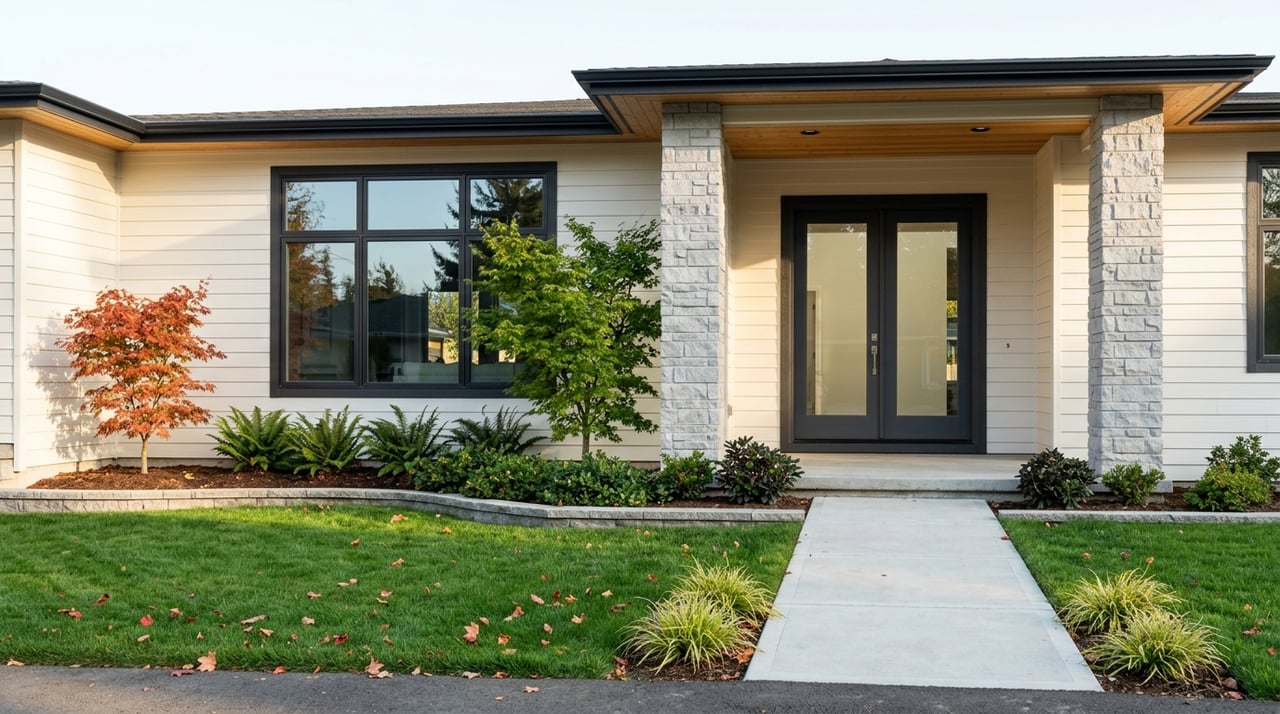
How to Analyze Duvall Real Estate Investing Deals
May 14, 2026
May 14, 2026
If you are thinking about investing in Duvall real estate, a good-looking property is not enough. In a small, mostly owner-occupied market, the numbers can get off track fast if you use the wrong comps, overestimate rent, or miss a permit issue. This guide will show you how to analyze a Duvall deal with more confidence, from comps and rehab planning to ADU potential and long-term hold math. Let’s dive in.
Duvall is not a copy-and-paste version of the broader Seattle area. The city had about 8,034 residents in the 2020 Census, and its housing stock is described as mostly owner-occupied single-family homes. That matters because a small, owner-heavy market often needs tighter comp selection and more conservative rental assumptions.
Recent Census QuickFacts show Duvall has an owner-occupied housing unit rate of 86.4%. The median value of owner-occupied homes is $830,100, and median gross rent is $2,042. By comparison, King County is much less owner-heavy at 55.4%, which is a useful reminder that countywide rental patterns may not translate neatly to one Duvall property.
If you are underwriting a flip, a light rehab, or a long-term hold, your edge comes from staying local and specific. In Duvall, that means checking zoning early, building a comp set that fits the property closely, and treating rent projections with discipline.
Your first job is to estimate resale value or current market value as accurately as possible. In Duvall, broad metro averages are too blunt to be very helpful. A better public benchmark comes from King County Assessor market data for Area 70, Duvall and Environs.
For the 2025 update, the Assessor analyzed 647 improved sales from January 1, 2022 through December 31, 2024 and time-adjusted them to January 1, 2025. That report showed a mean adjusted sales price of $1,073,700. This does not mean every Duvall property is worth that number, but it does show the value range of the market area you are working in.
King County’s public eSales tool is the strongest starting point for comp work in Duvall. It lets you filter by area, sale date, present use, lot size, living area, year built, grade, condition, and features like waterfront or view influence.
That level of filtering matters in a small market. If you pull sales that are too broad, you can easily overvalue a dated home on a small lot or undervalue a better-finished property with stronger utility and layout.
In Duvall, a strong comp set should focus on recent closed sales in the same market area whenever possible. You want homes with similar lot size, age, condition, living area, and renovation level.
This is especially important because Duvall includes different housing patterns. Old Town has older, small-lot single-family homes and some older multifamily buildings, while the eastern plateau includes larger-lot suburban-style homes and some higher-density pockets near NE 150th Street and the NE 143rd Place and NE 145th Street corridor. A sale from one part of the city may not behave like a sale from another.
Not every recorded sale belongs in your analysis. King County Assessor says non-typical sales should be excluded before analysis, including vacant parcels, mobile-home parcels, multi-parcel or multi-building sales, incomplete new construction, remodel-distorted sales, short sales, and foreclosures.
That step is easy to skip when you are moving fast. It is also one of the quickest ways to produce a flawed after-repair value.
If you are forced to use older comps, adjust with caution. The Assessor explicitly time-adjusts sales to the January 1 valuation date, which shows how important timing is when market conditions shift.
In plain terms, a sale from many months ago may not reflect today’s value. In a smaller city like Duvall, where the comp pool can be limited, this becomes even more important.
A deal can look great on paper until the renovation plan runs into zoning, permit, or scope issues. In Duvall, this step should happen early, not after you are already attached to the upside story.
The city adopted a Housing Action Plan in 2023, and the housing element says that plan informs current housing policy. The city also notes that development regulations must remain consistent with the comprehensive plan under Washington’s Growth Management framework. For investors, the practical takeaway is simple: verify your land-use and zoning assumptions before underwriting added value.
If your plan depends on an ARV jump, a garage conversion, interior reconfiguration, or added rental income, confirm what is actually allowed. A property may have cosmetic upside but limited flexibility for more ambitious changes.
This is where local analysis beats generic investment formulas. In Duvall, the right question is not just, “Can I improve it?” It is, “Can I improve it in the way my budget and exit plan require?”
Permit rules can change your budget, timeline, and carrying costs. In Duvall, a permit is required for constructing, enlarging, altering, repairing, moving, demolishing, or changing occupancy of a structure. Permits are also required for altering electrical, gas, mechanical, or plumbing systems.
The city says work may not begin before permits are issued and approved plans are on site. That is a key underwriting issue because delays on permits or revised scopes can quickly change your holding timeline.
Duvall’s permit guidance specifically flags several investor-relevant items, including:
If your budget assumes a quick cosmetic project, make sure the actual scope matches that assumption. A so-called light rehab can become a permit-heavy project faster than many buyers expect.
In Duvall, an ADU can be a real value-add path, but only if the property and zoning support it. The city’s 2025 ADU ordinance allows up to two ADUs per principal dwelling unit in specified residential and mixed-use zones.
The ordinance says its purpose is to reduce barriers to ADUs, support affordable housing, and provide homeowners with a rental-income path. For investors, that means ADU feasibility is worth checking early on any long-term hold strategy.
Because Duvall is largely owner-occupied, added rental income can change the math on a hold property. An ADU may improve flexibility, support cash flow, or make a deal more resilient if your primary rent assumptions are tight.
The same ordinance also says the R20 zoning district is intended to address rising housing costs, encourage workforce housing, and provide more rental opportunities. That does not mean every property is an ADU candidate, but it does mean this is a serious local factor, not just a trend headline.
Before you count on ADU income, verify:
If any of those pieces are unclear, underwrite the deal without ADU upside first. Then treat ADU income as additional upside only after the feasibility looks solid.
One of the biggest mistakes investors make in Duvall is using broad King County rental numbers as if they apply evenly everywhere. They do not.
HUD’s April 2026 market-at-a-glance report said King County had a balanced rental market with a 7.0% vacancy rate in late 2025 and average rent of $2,092. That is useful corridor-level context, but it is not proof that a specific Duvall property will achieve the same performance.
Duvall’s owner-occupancy rate is much higher than the county’s, which suggests a thinner local rental pool. In practical terms, that means you should verify current rent demand at the property level instead of assuming countywide averages will transfer directly.
A smaller rental pool can affect lease-up time, tenant demand by property type, and the rent premium you can actually achieve after improvements. This is one reason conservative vacancy assumptions matter here.
For a long-term hold, your rent analysis should go beyond principal, interest, taxes, and insurance. Duvall city utilities cover water, sewer, and storm drains, and residential monthly bills typically run about $150 to $190. Garbage and recycling are mandatory as well.
For a smaller single-family rental, those line items can have a meaningful effect on margin. If the deal only works when you ignore utilities, maintenance, and vacancy, it may not work at all.
Commute patterns still matter in Duvall underwriting. Census QuickFacts show a mean travel time to work of 31.1 minutes, and the city’s transportation page lists Snoqualmie Valley Transportation plus regional links such as Route 224 to Redmond Transit Center and connections toward Bellevue and Seattle transit.
That does not guarantee demand, but it does support commuter access as part of a hold thesis. If a property’s appeal depends on access to Eastside job centers, transportation context belongs in your analysis.
If you want a clean way to analyze a Duvall investment, follow this order:
This sequence helps you avoid the most common errors in small-market investing. It also gives you a more realistic picture of whether the deal works as a flip, a light rehab, or a long-term hold.
Duvall can offer solid investment opportunities, but it rewards disciplined analysis more than broad assumptions. The market is smaller, more owner-occupied, and more sensitive to comp quality, permit scope, and realistic rent underwriting than many investors expect.
If you focus on local comps, verify the renovation path early, and treat rental projections conservatively, you can make better decisions and reduce avoidable risk. In a market like Duvall, precision is not optional. It is the strategy.
If you want a sharper read on a Duvall property, from comp support to resale positioning and negotiation strategy, Sipos Homes LLC can help you evaluate the opportunity with local Eastside insight and practical guidance.
Stay up to date on the latest real estate trends.
Etiam non quam lacus suspendisse faucibus interdum. Orci ac auctor augue mauris augue neque. Bibendum at varius vel pharetra. Viverra orci sagittis eu volutpat.
AMANDA SIPOS
800 5th Ave Suite 101-800 Seattle WA 98104